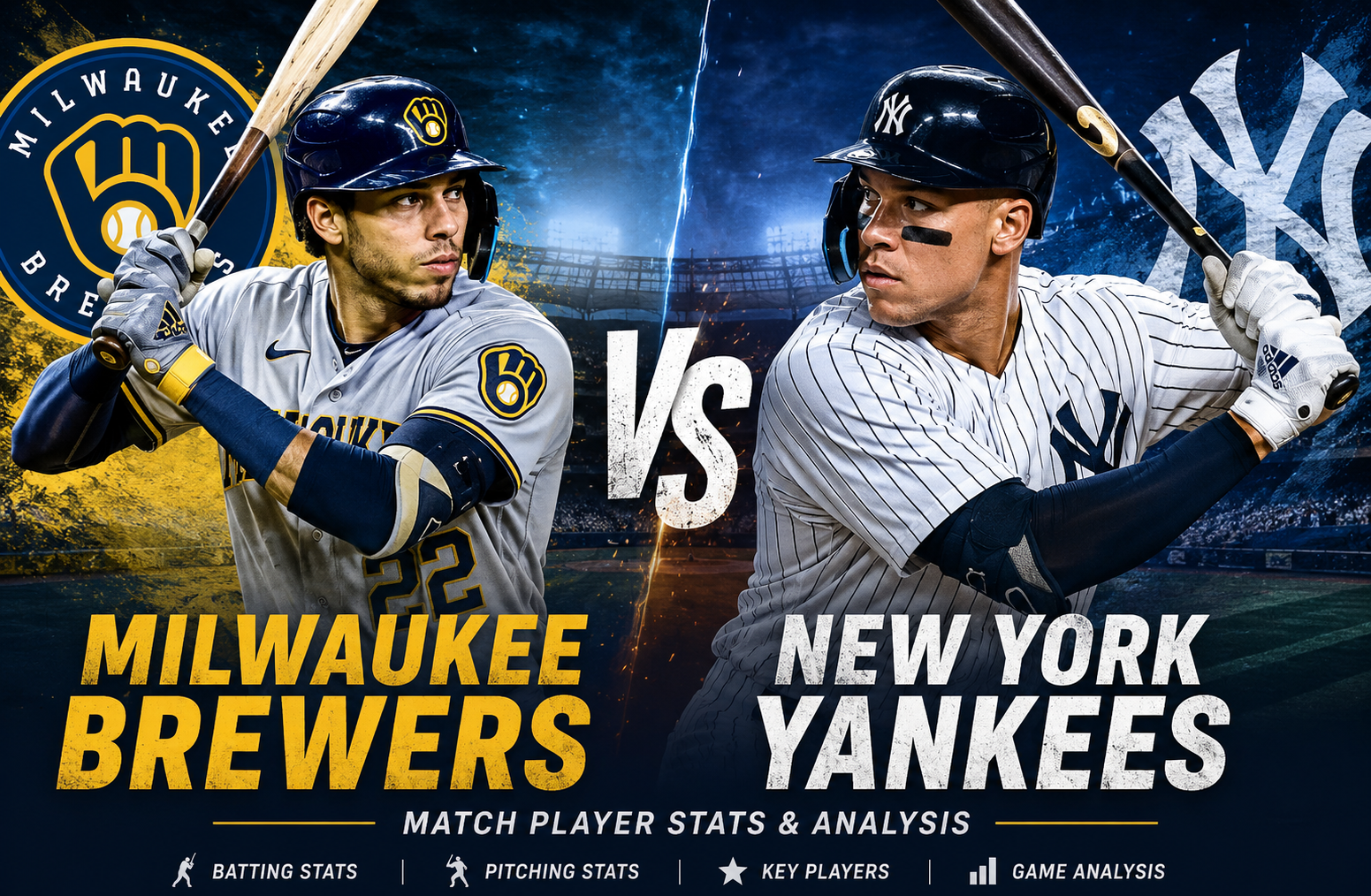
Milwaukee Brewers vs New York Yankees Match Player Stats
The Milwaukee Brewers vs New York Yankees Match Player Stats topic continues to attract massive attention from baseball fans who want more than just the final score. Supporters of both franchises want detailed player breakdowns, batting trends, pitching efficiency, defensive moments, and tactical insights that explain how the game was truly won or lost. Whether you follow the American League powerhouse Yankees or the disciplined and balanced Brewers roster, player statistics reveal the deeper story hidden behind every inning.
Baseball has always been a numbers driven sport, but raw numbers alone rarely explain momentum swings, clutch performances, or managerial decisions. That is why understanding advanced and traditional stats together gives fans a clearer view of player impact. In this detailed analysis, we will break down the most important performances, compare star players, analyze pitching battles, and examine how statistical trends shaped the matchup between Milwaukee and New York.
Why This Matchup Draws So Much Attention
Whenever the Milwaukee Brewers and New York Yankees meet, the game feels bigger than a standard interleague contest. The Yankees represent one of the most historic franchises in baseball history, while the Brewers have earned respect for building competitive rosters through smart scouting, disciplined pitching, and aggressive situational baseball.
Fans are especially interested in:
- Star hitter performances
- Pitching duel statistics
- Home run efficiency
- Bullpen reliability
- Strikeout ratios
- On base percentage
- Defensive plays
- Clutch inning performances
The clash between power hitting and structured pitching often creates fascinating statistical battles.
Milwaukee Brewers vs New York Yankees Match Player Stats Breakdown
A full Milwaukee Brewers vs New York Yankees Match Player Stats review shows how individual contributions directly influenced momentum throughout the game. Some players delivered explosive offensive production, while others changed the outcome quietly through elite defense or bullpen control.
Yankees Offensive Leaders
The Yankees lineup is typically built around power, patience, and run production. In this matchup, several hitters stood out because of their ability to capitalize on mistakes.
Aaron Judge Performance Analysis
Aaron Judge remains the centerpiece of the Yankees offense. His plate discipline forces pitchers into difficult situations, and his ability to drive the ball to all fields makes him dangerous in every at bat.
Key statistical strengths often include:
- High slugging percentage
- Elite exit velocity
- Strong walk rate
- Extra base hit production
- RBI consistency
What separates Judge from many power hitters is his patience. Even when he does not homer, he changes pitching sequences for the entire lineup.
Giancarlo Stanton’s Offensive Impact
Giancarlo Stanton brings raw power that few players can match. Against Milwaukee pitching, Stanton’s ability to punish fastballs becomes especially important.
His value in matchups like this usually appears through:
- Hard hit percentage
- Long ball production
- Deep counts against pitchers
- Pressure creation with runners on base
Even one swing from Stanton can completely alter momentum.
Gleyber Torres and Infield Production
Gleyber Torres often plays a critical supporting role. While Judge and Stanton attract attention, Torres contributes through contact hitting and situational offense.
Important contributions include:
- Timely singles
- Gap hitting
- Double play avoidance
- Defensive stability
These smaller statistical categories frequently determine close games.
Brewers Offensive Standouts
The Brewers traditionally rely on balanced offensive production rather than depending entirely on superstar power hitters. Their success usually comes from disciplined approaches and intelligent base running.
Christian Yelich’s Contribution
Christian Yelich remains one of Milwaukee’s most influential players. His offensive value extends beyond home runs because he consistently creates pressure through contact and athleticism.
Important metrics include:
- On base percentage
- Stolen base success
- Batting average with runners in scoring position
- Line drive percentage
Yelich’s ability to start rallies often changes the emotional flow of games.
Willy Adames and Power Production
Willy Adames provides a combination of defensive reliability and offensive aggression. Against Yankees pitching, his approach against breaking balls becomes extremely important.
Statistical strengths include:
- Pull side power
- Home run efficiency
- Defensive range
- RBI opportunities
His versatility gives Milwaukee flexibility late in games.
William Contreras Behind the Plate
William Contreras contributes both offensively and defensively. Catcher statistics often go unnoticed, but framing pitches and controlling the running game matter heavily against aggressive teams.
Important catcher metrics include:
- Pitch framing efficiency
- Throw out percentage
- OPS against left handed pitching
- Clutch batting situations
Contreras adds stability to the Brewers roster.
Pitching Matchup Analysis
Pitching almost always decides games between evenly matched teams. In the Milwaukee Brewers vs New York Yankees contest, starting pitchers set the tone early.
Yankees Starting Pitcher Performance
The Yankees pitching philosophy has increasingly emphasized strikeout generation and limiting hard contact. Their starters often focus on velocity and slider usage.
Key categories include:
- Strikeouts per inning
- Swing and miss rate
- Fastball velocity
- WHIP
- Ground ball percentage
A strong Yankees starter typically forces Milwaukee hitters into defensive counts early.
Brewers Pitching Strategy
Milwaukee’s pitching identity is usually built around command, sequencing, and bullpen efficiency. Brewers pitchers rarely rely on overpowering velocity alone.
Important pitching strengths include:
- Pitch location consistency
- Changeup effectiveness
- Bullpen ERA
- Limiting walks
- Situational pitching
The Brewers often succeed by frustrating aggressive hitters.
Bullpen Comparison
Modern baseball places enormous importance on bullpen reliability. One weak relief inning can erase six strong innings from a starter.
Yankees Bullpen Strengths
The Yankees relief unit generally emphasizes:
- High velocity relievers
- Strikeout specialists
- Late inning matchup advantages
- Closing experience
Strong bullpen performances reduce scoring opportunities in critical innings.
Brewers Bullpen Efficiency
Milwaukee has built a reputation for developing reliable relievers who thrive under pressure.
The Brewers bullpen typically excels in:
- Limiting inherited runners
- Ground ball inducing pitches
- Consistent strike throwing
- Late inning composure
This depth frequently keeps games competitive deep into the ninth inning.
Defensive Statistics That Changed the Game
Defense often gets overlooked when fans focus only on batting averages and home runs. However, elite defense can completely reshape a close matchup.
Yankees Defensive Highlights
New York’s defense becomes particularly effective when:
- Turning double plays quickly
- Limiting extra bases
- Strong outfield arm accuracy
- Efficient infield positioning
A single defensive stop can save multiple runs.
Brewers Defensive Execution
Milwaukee’s defensive identity usually centers around discipline and positioning.
Important defensive elements include:
- Outfield range
- Catcher framing
- Defensive shifts
- Clean fielding percentage
The Brewers frequently prevent scoring through smart defensive preparation.
Advanced Statistics That Matter Most
Traditional baseball stats remain important, but advanced analytics provide deeper understanding.
OPS and Offensive Efficiency
OPS combines on base percentage and slugging percentage to measure complete offensive production.
Players with strong OPS numbers contribute through:
- Patience
- Power
- Consistent contact
This metric often predicts future success better than batting average alone.
WAR and Overall Player Value
Wins Above Replacement helps measure complete player impact.
WAR evaluates:
- Hitting contribution
- Defensive value
- Base running
- Positional importance
This statistic helps explain why some players influence games even without huge offensive numbers.
Exit Velocity and Hard Contact
Modern analytics heavily track how hard players hit the baseball.
Higher exit velocity often leads to:
- More extra base hits
- Better slugging
- Increased run production
Teams increasingly use this data for lineup optimization.
Key Turning Points in the Match
Every baseball game contains moments where momentum shifts dramatically.
Early Innings Pressure
When teams score early, pitching strategies often change immediately. Starting pitchers become more aggressive, while hitters may expand their strike zones under pressure.
Middle Inning Adjustments
Managers frequently alter tactics around the fifth or sixth inning.
This may include:
- Bullpen preparation
- Defensive shifts
- Matchup substitutions
- Pinch hitting opportunities
Smart adjustments separate elite teams from average ones.
Late Inning Execution
The final innings typically determine close matchups.
Winning teams usually excel through:
- Clutch hitting
- Bullpen command
- Defensive composure
- Smart base running
These moments define player reputations.
Comparing Team Philosophies
The Yankees and Brewers often approach roster construction differently.
Yankees Team Identity
The Yankees traditionally prioritize:
- Power hitters
- Big market acquisitions
- Offensive explosiveness
- Star driven production
This creates lineups capable of massive scoring innings.
Brewers Team Identity
Milwaukee frequently succeeds through:
- Player development
- Pitching depth
- Defensive structure
- Situational baseball
Their disciplined style often frustrates stronger offensive teams.
How Player Stats Influence Future Games
Statistical trends affect future strategy heavily.
Managers study:
- Pitcher versus hitter history
- Hot streaks
- Strike zone tendencies
- Fatigue indicators
These details influence future lineups and pitching decisions.
Real World Importance of Match Player Statistics
Many casual fans underestimate how deeply organizations analyze player data.
Front offices use statistics for:
- Trade evaluations
- Contract negotiations
- Lineup construction
- Injury prevention
- Scouting reports
Modern baseball operations depend heavily on analytical departments.
According to MLB Statcast, advanced tracking technologies now measure everything from sprint speed to pitch movement with incredible accuracy. These tools help teams understand player strengths at a much deeper level.
Common Challenges When Analyzing Baseball Stats
Not every statistic tells the full story. Context matters enormously.
Small Sample Size Problems
One strong game does not always indicate long term success.
Fans should avoid:
- Overreacting to short streaks
- Ignoring opponent quality
- Misreading situational stats
Consistency matters more than isolated performances.
Ballpark Factors
Yankee Stadium and Milwaukee’s home park can influence offensive production differently.
Factors include:
- Outfield dimensions
- Weather conditions
- Altitude
- Wind direction
These variables impact player statistics significantly.
Injury Context
Players competing through injuries may show declining production despite maintaining strong reputations.
Smart analysis always considers health status.
Tactical Decisions That Impacted the Match
Managerial strategy can change outcomes dramatically.
Pitching Changes
Timing bullpen substitutions correctly often determines success late in games.
Pinch Hit Decisions
Using bench players strategically against favorable matchups creates scoring opportunities.
Defensive Positioning
Modern teams increasingly rely on analytics driven positioning.
Proper alignment can transform hard hit balls into routine outs.
Fan Reactions and Statistical Narratives
Baseball fans increasingly analyze games through advanced metrics rather than simple batting averages.
Popular fan discussion topics include:
- Clutch performance
- Launch angle
- Pitch sequencing
- Bullpen management
- Defensive efficiency
This analytical evolution has changed how audiences understand baseball.
What This Match Revealed About Both Teams
The Brewers and Yankees each demonstrated important strengths and weaknesses during this matchup.
Yankees Takeaways
New York showed:
- Offensive explosiveness
- Star power
- Pressure hitting ability
However, bullpen consistency and defensive execution can still determine whether the team reaches championship level performance.
Brewers Takeaways
Milwaukee displayed:
- Strong organizational discipline
- Efficient pitching
- Balanced offensive production
Their structure makes them dangerous against high payroll opponents.
Future Matchup Expectations
Future games between these teams will likely continue featuring fascinating contrasts.
Important factors to watch include:
- Starting pitching health
- Bullpen durability
- Home run efficiency
- Defensive consistency
These areas often decide postseason caliber games.
FAQs
What are the most important stats in a baseball matchup?
The most important baseball statistics usually include OPS, ERA, strikeout rate, WHIP, batting average with runners in scoring position, and defensive efficiency.
Why are advanced baseball statistics important?
Advanced stats provide deeper insight into player performance beyond traditional numbers like batting average or RBIs. They help explain consistency, efficiency, and long term value.
Who were the standout players in the Brewers vs Yankees game?
Key contributors often include offensive leaders like Aaron Judge, Christian Yelich, Giancarlo Stanton, and Willy Adames, along with starting pitchers and bullpen relievers.
How does pitching impact close baseball games?
Strong pitching limits scoring opportunities, controls momentum, and forces hitters into difficult situations. Bullpen performance becomes especially important late in games.
Why do fans analyze player statistics so closely?
Statistics help fans understand player consistency, team strategy, and overall game impact. They also improve discussions around awards, trades, and postseason potential.
What role does defense play in baseball outcomes?
Defense prevents runs, creates double plays, and changes momentum. Strong defensive teams often outperform opponents in close contests.
Conclusion
The Milwaukee Brewers vs New York Yankees Match Player Stats analysis reveals much more than a simple scoreboard result. Every inning contains layers of tactical decisions, individual brilliance, statistical trends, and momentum shifts that shape the final outcome. The Yankees continue to rely on power driven offense and superstar production, while the Brewers showcase disciplined pitching, balanced execution, and organizational depth.
Understanding these player statistics helps fans appreciate baseball at a deeper level. Offensive numbers explain scoring production, pitching metrics reveal strategic dominance, and defensive statistics uncover hidden game changing moments. As analytics continue evolving across Major League Baseball, player stats will remain central to evaluating performance, predicting future outcomes, and understanding how elite teams compete under pressure.