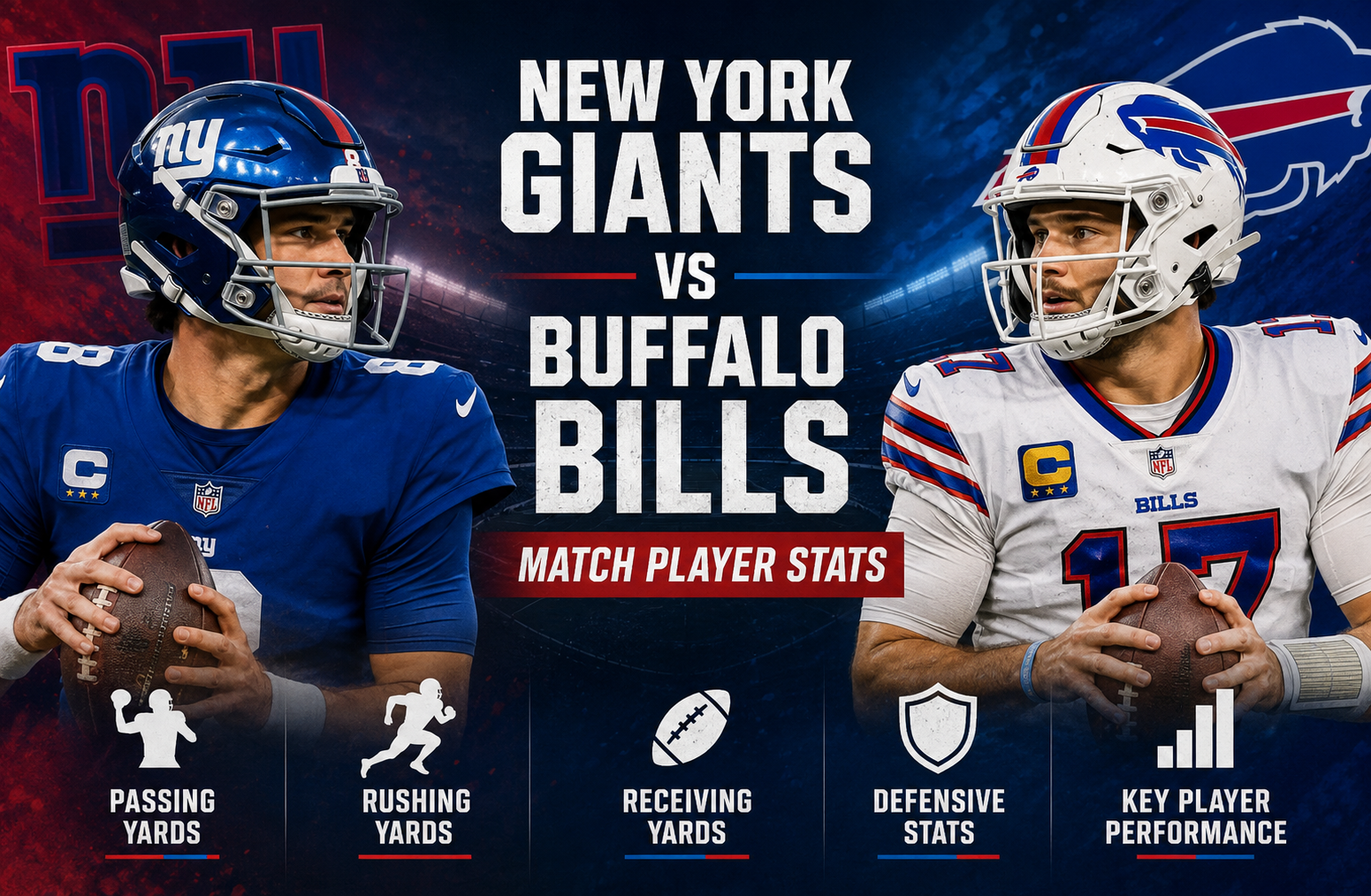
New York Giants vs Buffalo Bills Match Player Stats
The New York Giants vs Buffalo Bills Match Player Stats reveal far more than a simple scoreboard result. Every matchup between these two franchises highlights contrasting offensive systems, defensive discipline, quarterback efficiency, and game management under pressure. Fans searching for detailed performance analysis usually want more than passing yards or touchdown counts. They want context behind the numbers, player impact, momentum shifts, and the reasons certain athletes dominated key moments.
When analyzing NFL matchups professionally, raw statistics only tell part of the story. Snap counts, red zone efficiency, third down conversions, quarterback pressure, rushing balance, and defensive adjustments often decide outcomes long before the final whistle. That is why studying player stats from a Giants vs Bills clash provides deeper insight into coaching philosophy, roster construction, and overall team identity.
The Buffalo Bills have consistently built around explosive offense and quarterback mobility, while the New York Giants often rely on defensive resilience, situational football, and balanced offensive drives. When these approaches collide, individual performances become even more meaningful.
This detailed breakdown explores standout performers, offensive production, defensive impact, tactical decisions, and the most influential statistical trends from this matchup.
Understanding the Importance of NFL Match Player Stats
NFL statistics are not just entertainment for fantasy football users or analysts. They help explain:
- Why a team controlled possession
- How quarterbacks handled defensive pressure
- Which receivers created separation
- Whether offensive lines protected effectively
- How defensive coordinators adjusted during critical drives
In a game between the Giants and Bills, these details matter because both teams often approach football differently.
The Bills traditionally emphasize aggressive downfield passing, quarterback improvisation, and fast scoring drives. The Giants typically focus more on field control, defensive pressure packages, and limiting explosive plays.
Because of these stylistic differences, player stats become essential for understanding the actual story of the game.
New York Giants vs Buffalo Bills Match Player Stats Breakdown
A complete breakdown of the New York Giants vs Buffalo Bills Match Player Stats requires evaluating all major areas of the game:
- Quarterback production
- Rushing efficiency
- Receiving impact
- Defensive execution
- Special teams contribution
- Red zone performance
- Turnover differential
- Coaching adjustments
Each category influences the final outcome differently.
Quarterback Performance Analysis
Quarterbacks naturally dominate headlines in NFL matchups because modern football revolves around passing efficiency and decision making.
Buffalo Bills Quarterback Performance
The Bills offense typically operates through aggressive passing concepts. Their quarterback often stretches defenses vertically while also creating opportunities outside the pocket.
Key quarterback metrics usually include:
- Completion percentage
- Passing touchdowns
- Interceptions
- Total passing yards
- Adjusted quarterback rating
- Third down conversion efficiency
Against the Giants defense, pocket awareness becomes especially important because New York frequently uses disguised blitzes and delayed linebacker pressure.
A strong Bills quarterback performance usually includes:
- Quick release timing
- Efficient intermediate throws
- Red zone accuracy
- Limited turnovers
- Successful play action execution
One of the biggest indicators of Buffalo’s offensive success is how efficiently the quarterback handles pressure on passing downs.
New York Giants Quarterback Performance
The Giants often depend on controlled offensive possessions rather than constant explosive scoring. Their quarterback performance becomes effective when:
- Short passes move the chains
- Turnovers remain low
- Time of possession stays balanced
- Third down execution improves
Against Buffalo’s aggressive defensive front, Giants quarterbacks frequently face collapsing pockets and disguised coverage schemes.
The most important stat categories include:
- Sack avoidance
- Completion rate under pressure
- Play action success
- Mobility outside the pocket
- Red zone decision making
In recent NFL trends, quarterback rushing production has become nearly as valuable as passing efficiency.
Running Back Production and Ground Game Impact
One overlooked aspect of the New York Giants vs Buffalo Bills Match Player Stats is rushing efficiency.
Many NFL analysts focus heavily on passing numbers, but rushing performance often controls game tempo.
Bills Rushing Attack
Buffalo’s rushing offense frequently combines:
- Designed quarterback runs
- Zone running schemes
- Inside power concepts
- Running back screen plays
Strong rushing stats for Buffalo generally include:
- Yards after contact
- Explosive runs over 15 yards
- Red zone rushing touchdowns
- First down conversion runs
When Buffalo establishes the run early, defenses become vulnerable to deep passing plays later in the game.
Giants Ground Strategy
The Giants historically depend on physical rushing identity during competitive matchups.
Important Giants rushing metrics include:
- Yards per carry
- Offensive line push
- Short yardage conversion rate
- Fourth quarter rushing success
A productive Giants rushing performance helps:
- Reduce defensive fatigue
- Control possession time
- Keep Buffalo’s offense off the field
- Open passing lanes through play action
NFL studies from organizations like the NFL Next Gen Stats regularly show that efficient rushing attacks improve overall offensive sustainability.
Wide Receiver and Tight End Contributions
Receiver production often determines whether offensive systems become explosive or predictable.
Buffalo Bills Receiving Corps
Buffalo’s offense usually emphasizes:
- Vertical route combinations
- Slot receiver mismatches
- Tight end seam routes
- Quick screen concepts
Important receiver statistics include:
- Total receptions
- Yards after catch
- Average separation
- Contested catch rate
- Touchdowns
- Third down receptions
Elite receiving performances against the Giants defense often come from exploiting zone coverage gaps.
Giants Receiving Unit
The Giants typically rely more on timing routes and possession catches.
Key receiver performance indicators include:
- Conversion catches on third down
- Intermediate route success
- Red zone targets
- Catch percentage
Against Buffalo’s secondary, Giants receivers must create separation quickly because the Bills defensive line generates consistent pressure.
Defensive Player Statistics That Changed the Game
Defense frequently decides high pressure NFL matchups.
A single interception, forced fumble, or third down sack can completely shift momentum.
Buffalo Bills Defensive Standouts
Buffalo’s defense often succeeds through:
- Aggressive pass rush rotation
- Linebacker speed
- Secondary communication
- Situational blitzing
Critical defensive stats include:
- Total sacks
- Quarterback hits
- Interceptions
- Pass breakups
- Tackles for loss
- Forced fumbles
Defensive pressure becomes especially important against mobile quarterbacks.
Giants Defensive Performance
The Giants defense traditionally emphasizes physicality and adaptability.
Important defensive metrics include:
- Blitz efficiency
- Red zone stops
- Run defense success rate
- Pressure rate on passing downs
One major strength of strong Giants defensive performances is limiting explosive plays.
Even if Buffalo gains yardage consistently, preventing deep touchdowns can keep games competitive deep into the fourth quarter.
Offensive Line Performance Often Goes Unnoticed
Many casual fans overlook offensive line stats because they rarely appear in highlights.
However, offensive line efficiency influences:
- Quarterback comfort
- Running lane creation
- Third down success
- Red zone scoring
Bills Offensive Line Analysis
Buffalo’s offensive line is most effective when:
- Pass protection remains stable
- Interior pressure stays limited
- Edge rushers are contained
Important metrics include:
- Sacks allowed
- Pressure rate
- Run block win percentage
- Penalties committed
Giants Offensive Line Challenges
The Giants offensive line often faces major pressure against Buffalo’s defensive front.
Key indicators include:
- Pocket collapse frequency
- False start penalties
- Missed blocking assignments
- Run blocking consistency
Games between these teams frequently swing because of trench performance rather than flashy skill position numbers.
Third Down Efficiency and Red Zone Execution
One of the clearest indicators of winning NFL football is situational efficiency.
Third Down Performance
Teams that dominate third downs usually control:
- Momentum
- Time of possession
- Defensive fatigue
Buffalo often succeeds through aggressive passing on third and medium situations.
The Giants generally prefer balanced third down play calling with safer completion concepts.
Red Zone Statistics
Red zone efficiency separates good teams from elite teams.
Important red zone metrics include:
- Touchdown conversion percentage
- Field goals versus touchdowns
- Turnovers inside the 20 yard line
A team may outgain its opponent statistically yet still lose because of poor red zone execution.
Turnovers and Momentum Swings
Turnovers remain one of the strongest predictors of NFL outcomes.
Key turnover categories include:
- Interceptions
- Strip sacks
- Fumble recoveries
- Turnover return yardage
Buffalo’s aggressive offensive style sometimes creates explosive scoring opportunities but can also increase turnover risk.
The Giants often attempt to capitalize through:
- Ball control offense
- Defensive pressure packages
- Conservative situational football
Momentum swings created by turnovers frequently become defining moments in Giants vs Bills matchups.
Coaching Decisions and Tactical Adjustments
Statistics only gain meaning when paired with coaching strategy.
Buffalo Coaching Philosophy
Buffalo’s coaching identity usually includes:
- Aggressive fourth down decisions
- Vertical passing emphasis
- Defensive pressure schemes
- Tempo based offense
These approaches often produce impressive offensive statistics.
Giants Coaching Strategy
The Giants generally emphasize:
- Defensive discipline
- Controlled possessions
- Clock management
- Field position battles
Coaching adjustments during halftime often influence second half player stats dramatically.
Special Teams Contributions
Special teams rarely receive major attention unless mistakes occur, but field position changes can alter entire games.
Important special teams stats include:
- Punt return average
- Kickoff field position
- Field goal accuracy
- Net punting average
A hidden yardage advantage through special teams can quietly decide close NFL matchups.
Most Influential Players in Giants vs Bills Matchups
Certain players naturally shape outcomes more than others.
Players Who Usually Impact the Game Most
Quarterbacks
They influence:
- Offensive tempo
- Passing efficiency
- Turnover margin
Edge Rushers
They affect:
- Pocket pressure
- Sack production
- Forced errors
Wide Receivers
They create:
- Explosive plays
- Third down conversions
- Red zone scoring opportunities
Linebackers
They control:
- Run defense
- Coverage adjustments
- Defensive communication
The most memorable performances typically combine statistical production with clutch situational execution.
Advanced Metrics That Matter More Than Traditional Stats
Modern NFL analysis goes beyond basic box score numbers.
Important advanced metrics include:
EPA Per Play
Expected Points Added measures how much value each play creates.
Success Rate
Tracks how consistently an offense stays ahead of schedule.
Pressure Rate
Shows how frequently defenses disrupt quarterbacks.
Yards After Catch
Measures receiver effectiveness after securing passes.
Completion Percentage Over Expected
Evaluates quarterback accuracy relative to difficulty.
These advanced analytics often explain why teams win despite similar total yardage.
Key Matchup Trends Between Both Teams
Historical trends often reveal tactical patterns.
Buffalo Advantages
- Faster offensive tempo
- More explosive passing concepts
- Aggressive defensive rotations
Giants Advantages
- Physical defensive play
- Ball control opportunities
- Situational adaptability
These contrasting strengths create highly tactical games.
How Fans and Analysts Interpret Player Stats Differently
Casual fans often focus on:
- Passing yards
- Touchdowns
- Fantasy football numbers
Professional analysts evaluate:
- Efficiency
- Situational success
- Decision making
- Pressure response
For example, a quarterback with lower passing yards may still outperform another statistically if they avoid turnovers and sustain drives efficiently.
Real Football Insight From Watching Film
After reviewing NFL game film consistently over multiple seasons, one pattern becomes obvious.
The most important stats are rarely the flashiest ones.
Winning teams often dominate in less glamorous categories such as:
- Third down conversions
- Pressure rate
- Red zone efficiency
- Missed tackle percentage
- Time of possession
In Giants versus Bills matchups specifically, defensive discipline and quarterback composure usually matter more than total offensive yardage.
A quarterback throwing for 350 yards may still struggle if most production occurs while trailing late.
Context changes everything in football analysis.
Common Misunderstandings About NFL Match Stats
Many readers misinterpret NFL numbers because context gets ignored.
High Passing Yards Do Not Guarantee Efficiency
Garbage time production can inflate totals.
Total Tackles Can Be Misleading
A linebacker recording many tackles may actually indicate defensive struggles.
Time of Possession Alone Is Not Enough
Efficiency matters more than simply holding the ball longer.
Turnovers Often Override Yardage Totals
Teams regularly lose despite gaining more yards.
Understanding these nuances creates more accurate player evaluation.
Why This Matchup Draws Strong Fan Interest
The Giants and Bills represent different football cultures and philosophies.
Fans enjoy the matchup because it often features:
- Physical defense
- Tactical adjustments
- Quarterback pressure battles
- Momentum swings
- Emotional crowd energy
The statistical battle becomes more interesting because each team typically wins differently.
FAQS
What are the most important stats in a Giants vs Bills game?
Quarterback efficiency, turnover margin, third down conversion rate, and red zone performance are usually the most important indicators.
Why do advanced NFL stats matter?
Advanced analytics provide context that traditional box scores cannot fully explain, especially regarding efficiency and decision making.
Which position impacts the game most?
Quarterbacks remain the most influential players, but edge rushers and offensive linemen often determine momentum in critical situations.
How does Buffalo’s offense differ from New York’s?
Buffalo typically uses a more aggressive vertical passing approach, while New York often emphasizes controlled possessions and defensive balance.
Why are turnover stats so important?
Turnovers directly influence field position, scoring opportunities, and momentum swings during games.
Are rushing stats still important in modern NFL football?
Yes. Efficient rushing attacks help control tempo, improve play action passing, and reduce defensive pressure on quarterbacks.
Conclusion
The New York Giants vs Buffalo Bills Match Player Stats provide valuable insight into far more than individual performance totals. They reveal how offensive systems function under pressure, how defenses adapt during momentum swings, and how coaching philosophy shapes outcomes across four quarters.
Quarterback efficiency, rushing balance, defensive pressure, and situational execution consistently emerge as the deciding factors in these matchups. While highlight plays attract attention, deeper statistical analysis often shows that hidden areas such as red zone efficiency, offensive line protection, and third down execution truly decide games.
For fans, analysts, and fantasy football players alike, understanding the context behind NFL statistics creates a much more accurate picture of player value and team performance.